
RoyalXO editorial guide
RoyalXO Casino
RoyalXO is best read as an account process before it is treated as a gaming site: official domain, AUD, licence context, KYC, 2FA, safer gambling tools, bonus terms and withdrawal route first.
This Australian English guide uses an Australian risk lens without turning the page into a legal promise. ACMA enforcement, the Interactive Gambling Act and BetStop are treated as caution points that make written verification more important before any registration decision.
Reading order before an account
The page starts with facts rather than promotion. The user checks the official domain, AUD account presentation, age gate, licence context, security tools and safer gambling routes before reading bonus or games. That order is deliberate: a polished casino lobby can make a quick click feel harmless, while the real decision depends on account controls and withdrawal rules.
The Australian context makes caution stronger. ACMA has an enforcement role around prohibited interactive gambling services, and BetStop blocks access to licensed Australian online and phone playthrough providers. An offshore casino brand should therefore never be written as locally authorised just because it is accessible, advertised or visually professional.
The useful question is not whether the site looks premium. The useful question is whether the user can explain every step: how they reached the domain, which currency is shown, what identity documents may be requested, which method can withdraw, what limit is set, how a pause works and what happens if a bonus is cancelled.
The structure also separates stable facts from changeable claims. Brand name, currency expectation and age threshold are basic checkpoints; promotions, provider availability, payment methods and tournament campaigns can change. Anything that can change must be confirmed inside the current account area before funds move.
A cautious page must leave room for refusal. If a user cannot confirm one important point, the correct conclusion is not to guess. Waiting, asking support for a written answer or closing the page are valid outcomes. The guide is successful when it slows the decision down.
The fact block also protects the reader from mirror fatigue. A long list of alternative domains can look useful, but it often makes verification weaker. A short official-domain check, certificate check and support confirmation is easier to repeat and harder to manipulate.
For AU traffic the currency check is not decorative. AUD should appear in the cashier, deposit minimums, withdrawal limits, responsible gambling settings and bonus examples. If a page avoids numbers or switches currency without explanation, the user should treat that as a reason to slow down rather than as a harmless display issue.
Official-domain verification should be repeatable from memory: type the address, check the certificate, avoid shortened links and compare support replies with the account area. A user should never need a long chain of mirror links to reach a cashier or document upload screen.
The user should also distinguish account facts from promotional language. Account facts can be checked in settings, cashier, limit pages and support transcripts. Promotional language is useful only after those account facts are stable.
| Field | Detail | How to read it |
|---|---|---|
| Name | RoyalXO Casino | The name must match the logo, account area, cashier and support replies. |
| Website | https://royalxo.com/ | Use the official domain; long mirror lists should not replace a manual address check. |
| Currency | AUD / A$ | Bonuses, limits, deposits and withdrawals should remain in the same account currency. |
| Age | 18+ | Minors and self-excluded users must stay outside the registration flow. |
| Regulatory context | Interactive Gambling Act and ACMA enforcement | Offshore casino access must be read cautiously; no local authorisation is assumed. |
| Safer gambling | BetStop and local support tools | Self-exclusion and support access matter before promotions or VIP contact. |
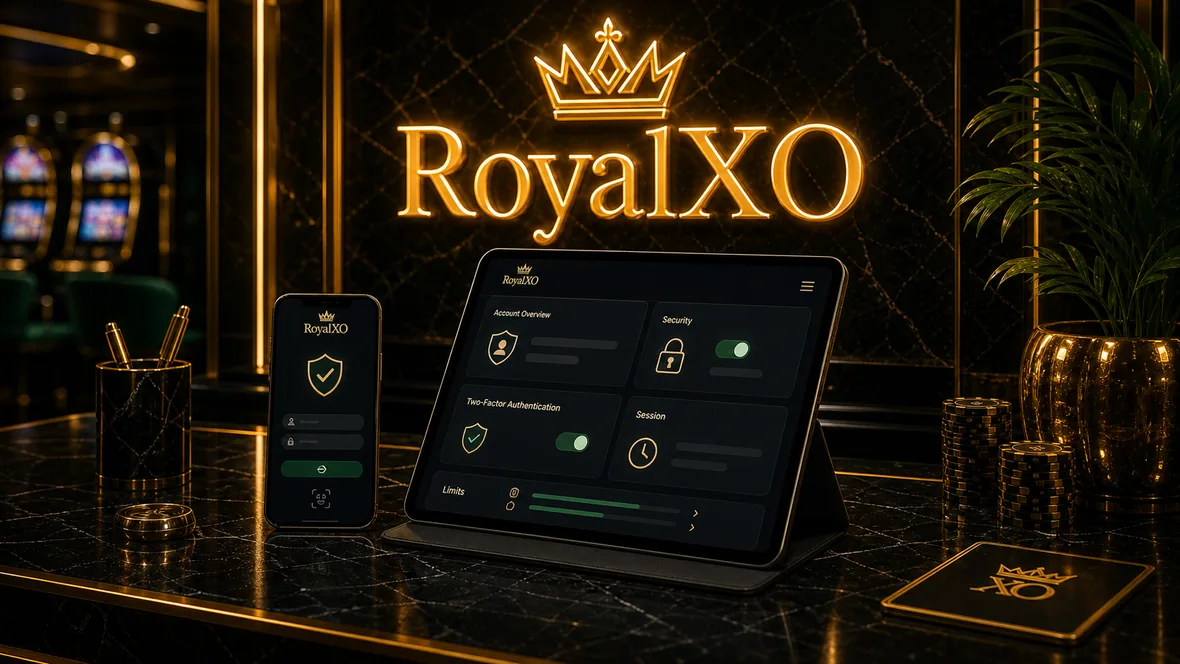
| Security | SSL, 2FA and account verification | Security combines password, email, device, KYC, payment ownership and session history. |
| Guide domain | https://royalxoaussies.com/ | This is the current domain for the independent Australian editorial guide. |
Editorial assessment without shortcuts
This assessment is not a permission slip. It is a way to split visible quality from verifiable evidence. RoyalXO may show a premium identity, broad games and promotional depth, but the user still needs written rules, account limits, KYC timing and a clear withdrawal path.
The scoring categories are questions. Bonus clarity asks whether numbers are visible. Payments ask whether a withdrawal route exists in AUD and under the same ownership. Mobile asks whether the browser route is enough without installing unknown files. Safer gambling asks whether limit and pause tools are easier to find than the next offer.
Security should be layered. Technical security is only one part: HTTPS and 2FA matter, but so do email protection, device control, KYC channel, payment ownership and session history. If support asks for documents through an informal route, the user should stop and return to the official account area.
The local risk lens changes the tone. The Interactive Gambling Act framework and ACMA enforcement mean an offshore casino cannot be described like a locally licensed playthrough operator. The page therefore avoids certainty language and uses practical checks rather than promises.
A positive score still allows a negative decision. If one essential answer is missing, a user can choose not to register even when the design, games or bonus look attractive. That freedom to reject is part of a useful assessment.
The score is therefore deliberately conservative. It does not reward a brand for visual polish alone, and it does not punish uncertainty by inventing facts. If an item requires account confirmation, the table says so in plain language.
The strongest evidence is practical and current. A screenshot of a bonus banner is weaker than the actual terms shown after login. A support greeting is weaker than a saved answer explaining a limit, document or payment route. A lobby screenshot is weaker than a working filter that separates live tables, slots and table games.
That conservative method also keeps the page useful after design changes. If colours, banners or menus change, the user can still follow the same path: facts, account security, cashier, bonus cost, games, live pace, mobile route, tournament pressure, VIP boundaries and safer gambling tools.
That approach is especially important for offshore casino pages aimed at readers who may know local betting brands better than offshore casino operators. Familiar design patterns can create misplaced confidence, so the evidence threshold stays high.
| Criterion | Value | Evidence |
|---|---|---|
| Bonus clarity | 82/100 | Value depends on playthrough, expiry, max bet and withdrawal effect, not headline size. |
| Games | 88/100 | A wide library helps only when slots, tables and live formats can be separated by risk and pace. |
| Mobile | 81/100 | Mobile web is practical; files from adverts or chats should not be installed. |
| Payments | 78/100 | The cashier must explain AUD, ownership, KYC timing, fees and withdrawal routes. |
| Support | 80/100 | Useful support gives a rule, amount, document, date or next step. |
| Control | 85/100 | Limits, BetStop awareness, pauses and self-exclusion outweigh promotion scale. |
Bonus read as a contract
A RoyalXO bonus should be converted into numbers before it is treated as value. Deposit minimum, match percentage, spins, playthrough, expiry, maximum bet, game weighting, cashout cap and cancellation rule belong together. If one piece is missing, the offer is not ready for an informed decision.
The account currency matters here. A bonus shown in AUD should match the cashier, limits and support answer. If a banner uses one figure and the account page uses another, the user should not fill the gap with assumptions. Written account terms are more important than promotional wording.
Bonus money and real money must stay understandable. If the interface mixes balances, the user can wrongly believe a withdrawal is available while conditions are still active. The first check is whether real balance, bonus balance and promotional winnings appear separately.
Bonus rounds need their own reading. Game, spin value, expiry and treatment of winnings can make a small clear offer better than a large confusing one. If a spin prize creates new playthrough, it should be considered a second condition, not immediate value.
Personal offers require stronger caution. A tailored message can feel trustworthy, but without written terms, date, value and opt-out route it is weaker than a public offer with visible rules. A user should be able to say no without losing basic support.
Playthrough should be compared with actual playing style. A requirement that looks possible on paper may still be unsuitable if it forces longer sessions, higher stakes or games the user would not normally choose. Time is part of the cost.
Cancellation rules deserve the same attention as headline value. A user should know whether cancelling removes only bonus funds, affects real balance, or changes withdrawal eligibility. If this is unclear, the offer is not ready.
Another useful habit is to calculate the offer at the smallest acceptable deposit rather than at the largest headline example. If the offer only looks attractive when the user stretches the budget, the promotion is controlling the decision. The deposit amount should be chosen first, with the bonus treated as optional.
Bonus pages can also hide pressure in expiry language. A short timer, reload window or weekend package should not override the time needed to read terms. If the user cannot explain the rules without reopening the page, the offer is too fragile for immediate activation.

| Offer | What to check | Prudent decision |
|---|---|---|
| Welcome offer | Minimum deposit, playthrough and expiry | Accept only if the requirement fits a fixed budget. |
| Reload package | Changed max bet or game weighting | Do not accept by habit after the first deposit. |
| Large package | Higher amount and possible withdrawal cap | A bigger offer needs a lower personal limit. |
| Bonus rounds | Game, spin value and expiry | Check whether winnings carry new conditions. |
| Personal offer | Written terms inside account | Do not rely on chat promises without saved rules. |

Slots, tables and playing pace
A game library should be read by pace rather than by size. A classic slot, a volatile video slot, a jackpot, roulette, blackjack and a live table do not place the same pressure on the budget. Variety helps only when it allows slower choice and clearer limits.
For a first account test, the objective is not excitement. It is to see whether balance, history, limits and bonus status update clearly. A slower game can teach more about the account than a famous title with rapid rounds and feature buys.
Table games need separate treatment. Roulette depends on wheel type and limit. Blackjack depends on decks and rule variations. Baccarat depends on commission. Casino poker depends on ante and side bets. Folding them into one generic casino line hides meaningful cost differences.
Game filtering matters. If the lobby cannot separate volatility, minimum stake, provider, live format or bonus eligibility, the user must proceed more slowly. A large lobby without usable filters can create confusion rather than choice.
Promotional eligibility is part of the game decision. Some games may not count towards playthrough or may count only partly. A game that is entertaining outside a bonus can be unsuitable during a bonus if the contribution is low or excluded.
Game choice should also include a planned pace. The user can decide in advance how many rounds to test, which stake to use and when to leave. Without that plan, a large library becomes a sequence of nudges rather than a set of options.
Table games should never be hidden inside a generic casino paragraph. Roulette, blackjack, baccarat and poker-style games each have rules that change cost. This is why the main structure gives them their own table instead of treating them as decoration.
A good game section also explains what not to use during a first test. High-volatility slots, feature-buy games, side bets and fast live formats can make the account harder to read. A measured first session should prioritise clear balance movement, stable history and easy exit over entertainment intensity.
Provider names are useful only when they help the user find rules or confirm availability. A long list of studios can look impressive, but the important question is whether the current lobby shows minimum stake, rules, demo access where available and bonus eligibility without forcing the user into play.
| Type | Control | Reason |
|---|---|---|
| Classic slots | Minimum bet and line count | Useful for slower account testing. |
| Video slots | Volatility and feature buy rules | Can spend a budget quickly. |
| Jackpots | Eligible stake and prize rules | A large prize does not remove risk. |
| Megaways | Variable ways and round pace | Use fewer rounds during a test. |
| Popular titles | Category examples, not availability promises | Check current lobby before assuming access. |
| Game | Pre-check | Practical risk |
|---|---|---|
| Roulette | Wheel type, limits and table rule | Variant changes house edge and speed. |
| Blackjack | Doubling, split, insurance and decks | Small rules change value. |
| Baccarat | Commission and available bets | History does not predict the next hand. |
| Casino poker | Ante, side bets and pay table | Side bets often raise risk. |
Live casino with a clear exit
Live casino adds social and time pressure: dealer, chat, seat availability, countdown and a sense of event. Those elements can make the user act faster than planned. The limit for rounds, time and loss should be written before the table opens.
A professional studio does not reduce financial risk. Lighting, presentation and a clear dealer improve the experience, but they do not guarantee withdrawal, reduce house edge or make a high minimum suitable for a test account.
History boards should be treated as past information only. They do not predict the next spin or hand. If a user starts reading streaks as signals, the table has stopped being a measured activity and has become a chase.
Game show formats deserve extra caution. Multipliers, presenters and bonus rounds are entertaining, but they increase stimulation and pace. The safer first step is a low limit and a fixed exit point, not a plan to wait for a special feature.
The exit rule is practical: leave after the planned number of rounds, at a chosen balance point or when the countdown starts to feel urgent. The rule must be set before play because live sessions leave little space for reflection.
Live play can also blur the difference between entertainment and social pressure. A friendly dealer or active chat can make staying feel natural even after the planned limit is reached. The user should treat that feeling as a reason to pause, not as a reason to continue.
If a live table is linked to a bonus or tournament, the pressure increases again. The user may feel that leaving wastes progress. A safer rule is to protect the budget first and accept lost progress as the cost of control.
Live chat should not become a decision engine. Dealers and other players may create a feeling of momentum, but the account holder is still responsible for stake, time and exit. If chat makes the user feel watched, encouraged or rushed, hiding chat or leaving the table is a sensible control.
Latency and mobile reception are also practical risks. A delayed button, unstable connection or interrupted verification message can turn a simple action into confusion. Live sessions are best started only when the connection is stable and the user is not multitasking.
| Format | Before entering | Healthy limit |
|---|---|---|
| Live roulette | Minimum in AUD and table rules | Do not raise stake to take a seat. |
| Live blackjack | Seats, pace and allowed decisions | Leave after the planned number of rounds. |
| Live baccarat | Commission and active bet options | Treat streaks as past data only. |
| Game show | Multipliers and bonus rounds | High-energy format needs a low limit. |

Deposits and withdrawals
The cashier is the main test of usefulness. A deposit route is not enough. The user needs to know which method can withdraw, whether the name must match, when KYC starts, whether fees exist and whether AUD is consistent across bonus, limits and cashier screens.
The withdrawal should be considered before the deposit. A fast entry method can be awkward for exit. A voucher can help limit spend but may require a different payout route. A bank transfer can be slower but clearer for ownership. Each route needs a complete circuit.
Ownership is not a detail. Payment method, account name and documents should belong to the same person. If a third-party account is used, the issue may appear only after the user has met playthrough or won funds.
Speed claims need context. A payout can be fast after internal approval, while internal approval depends on KYC, bonus checks and payment matching. The user should read speed claims with verification conditions, not as standalone promises.
Credit and digital currency restrictions in the local betting environment reinforce a simple habit: do not use borrowed money, credit-like funding or unclear payment routes for gambling decisions. A pre-set budget and traceable ownership are safer than convenience.
KYC timing is part of payment planning. The best moment to understand document requirements is before the first deposit, not after a withdrawal request. Identity, address and payment ownership checks should be handled through the official account area, with informal document requests treated as a stop signal.
The payment table should be read from right to left as well as left to right. The withdrawal note decides whether the deposit method is sensible. If a route is easy to fund but unclear for exit, it is not a complete route; it is only an entrance.
| Method | Deposit | Withdrawal | Note |
|---|---|---|---|
| Debit card | Fast if approved | May need extra verification | Ownership must match the account. |
| Bank transfer | Slower but traceable | Often suitable for larger amounts | Name and account details must match. |
| E-wallet | Quick when verified | Usually depends on completed KYC | Do not use third-party wallets. |
| Voucher | Useful for limited deposits | Rarely a direct withdrawal route | Set a payout route first. |
Mobile access without rushed installs
Mobile access is useful for checking balance, support, limits and history, but it should not accelerate deposits. The first route should be the verified browser address, visible certificate, 2FA and a private connection. Files from adverts, direct messages or mirrors should not be installed.
A small screen can hide terms. Before confirming a bonus, deposit or payment change, the user should open the full text, rotate the device if useful and check that amounts and conditions are not cut off.
Notifications deserve separate control. A bonus, tournament or VIP alert can arrive at a poor moment and create urgency. Security alerts can remain on; marketing prompts should be silenced if they influence unplanned deposits.
Mobile and desktop should show the same information. If limits, bonus status, cashier rules or KYC steps appear differently, the user should trust the fuller version and ask support for written confirmation.
Installation permissions need a reason. If an app or shortcut asks for access that the user cannot explain, it should not be granted. Convenience is not a substitute for origin, permissions and removal clarity.
Mobile sessions should be shorter by design. Small screens make it easier to miss a checkbox, a currency note or a withdrawal condition. A sensible mobile habit is to use the phone for checking status and support, then handle larger account decisions on a wider screen.
Saved passwords and shared devices need attention. If another person can open the device, the casino account is not private. A screen lock, unique password, 2FA and logout habit matter more than a fast icon on the home screen.

Tournaments without chasing
A tournament turns play into a race. It can be entertaining, but the ranking does not show the cost of chasing one more place. Before entry, the user needs period, scoring formula, eligible games, prize split, tie-break rule and opt-in method.
The budget is set before the leaderboard appears. If the table can change the amount a user is willing to spend, the campaign already has too much control over the session.
Missions should be read as separate promotions. Each mission can require a certain game, minimum stake, number of rounds or time window. If completing it breaks the personal plan, the mission is rejected.
Prize type matters. Cash, bonus, spins, entries and VIP points do not carry the same value. If the prize creates new playthrough, it is not equivalent to available money.
Tournaments can overlap with bonus and VIP incentives. When one stake counts towards several goals, walking away can feel like losing multiple benefits. A prudent user separates the incentives and accepts losing one rather than breaking the budget.
Leaderboard position should be treated as entertainment, not as a recovery plan. A player near a prize line may be tempted to add deposits or raise stake, but the prize still remains uncertain. The fixed budget must survive the leaderboard.
Campaign messages should be checked for opt-in status. If points begin automatically, the user needs to know how to ignore the table. If entry is manual, the user should not opt in until scoring, prize split and eligible games are visible.
| Element | Required detail | Pause signal |
|---|---|---|
| Period | Start, finish and time zone | No date means no verifiable campaign. |
| Scoring | Formula and eligible games | Opaque points make cost unclear. |
| Prizes | AUD breakdown | A total pool without split is weak. |
| Opt-in | Voluntary entry and exit | The user must know when participation starts. |
VIP programme with boundaries
VIP should improve clarity, not pressure. A useful programme may offer quicker explanations, tailored support or written conditions, but it should not make the user feel they must deposit more to keep status.
Personal contact needs boundaries. The user should be able to ask for written terms, reject an offer and request a pause without argument. Friendly tone is not a replacement for traceable account rules.
The VIP language itself should be watched. Exclusive, personal and limited can create obligation. A sound offer survives a delay; it does not require an immediate answer during a long session or after a loss.
Documents, payment changes and sensitive account actions belong in the official account area. A manager can explain the route, but should not move private information into informal channels.
A healthy programme respects exit. It should be as easy to lower limits, pause marketing or step back as it is to receive a package. Status must never be worth more than control.
VIP support can be useful when it shortens explanations, but it becomes risky when it adds emotional pressure. The user should never feel that a named contact, status label or promised package requires another deposit. A clear written answer is valuable; urgency is not.
Lossback, cashback and personal reloads should be read as new conditions rather than compensation. If an offer returns part of a loss only after more activity, it can extend the session instead of reducing harm. The user should evaluate it like any other promotion.
| Level | Possible benefit | Necessary control |
|---|---|---|
| Entry | Basic offers and notices | Set limits before accepting any package. |
| Middle | Quicker support or tailored offers | Ask for written rules. |
| High | Larger packages | Do not raise budget for status. |
| Pause | Limits and self-exclusion | A good programme must respect withdrawal from play. |
Player feedback as evidence
Player feedback is useful when it contains data: date, method, KYC status, support answer and outcome. A short complaint or brief compliment is not enough to decide. The useful task is to turn repeated experiences into questions before registration.
Positive feedback needs the same discipline. Fast payout means little unless the amount, method, verification status and bonus situation are known. A good bonus comment matters only if the user explains terms and withdrawal effect.
Patterns are stronger than extremes. One excellent story can depend on a small withdrawal and one bad story can depend on an unmet condition. Repeated themes about KYC, bonus clarity, mobile screens or support replies are more useful.
Feedback also reveals silence. If many comments discuss games but few mention withdrawals, the cashier still needs careful checking. If support praise is common but limit or closure stories are absent, those questions should be asked directly.
External experience never replaces account terms. It points to where to look: documents, cashier, bonus page, mobile display or support wording. The final decision still depends on the current account.
The strongest feedback examples contain a timeline. They explain when the account was opened, when KYC was requested, which payment route was used, how support answered and when the case ended. Without a timeline, praise and criticism can both become noise.
Feedback should also be checked for motive. Some comments are written during frustration, some after a small win and some as promotional copy. The useful middle ground is specific, calm and verifiable. That is the feedback worth turning into pre-registration questions.

| Topic | Useful signal | How to use it |
|---|---|---|
| Payments | Dates, method and status | Compare with cashier rules. |
| Bonus | Saved conditions | Check whether dispute was predictable. |
| Support | Concrete next step | Avoid vague reassurance. |
| Mobile | Same data as desktop | Be wary of shortened screens. |
Safer gambling and real pause
Safer gambling should alter how every earlier block is read. In bonuses, it means not chasing playthrough. In payments, it means not increasing deposits for convenience. In live casino, it means leaving at the planned round count. In tournaments, it means dropping the ranking. In VIP, it means status does not change budget.
BetStop is an important local support reference because it is a free Australian Government self-exclusion register for licensed Australian online and phone playthrough providers. Even where an offshore casino is outside that direct operator set, the existence of BetStop is a reminder that self-exclusion and support tools belong before promotion.
Personal warning signs should be named. Playing to change mood, hiding activity, borrowing money, cancelling plans, raising stake after losses or checking offers compulsively are reasons to stop. They are not normal steps in a casino journey.
A pause must be practical: log out, silence marketing, withdraw permitted funds, tighten limits, use exclusion tools or seek support. Saying play responsibly is not enough if the page does not show how to step away.
The safest conclusion can be no registration. If the user lacks a closed budget, cannot understand KYC, feels rushed by a timer or cannot confirm the withdrawal route, closing the page is the correct outcome.
Support organisations, exclusion tools and personal limits are not emergency decorations; they are part of the first decision. The user should know where to pause before they know where to claim an offer. That order keeps gambling inside a planned boundary instead of a reaction.
Friends and family can be part of the boundary as well. If gambling becomes hidden, defensive or difficult to discuss, the account no longer sits inside ordinary entertainment. A private limit is useful, but outside accountability can be stronger.
Final control before the click
The final checklist turns the long structure into practical actions. It does not add another promise. It asks whether the user can confirm the official domain, AUD currency, IGA and ACMA context, account security, bonus cost, withdrawal route, BetStop awareness and personal stopping point.
If one answer depends on guessing, the process is not ready. A small deposit does not solve unclear terms; it only adds money to an unclear process. The better action is to ask, wait or leave.
The checklist also protects against overconfidence after reading a long guide. Understanding the topic is not the same as being ready to gamble. The ready state is calmer: fixed budget, no urgency, written answers and a clear right to stop.
Even when every point is clear, registration remains optional. The guide reduces uncertainty; it does not push action. Continuing, waiting and closing the page are all valid choices when based on understood information.
The final page state should feel slower than the first impression. The user has moved from brand image to domain evidence, from bonus size to cost, from games to pace and from access to self-exclusion. If that slower view makes the offer less attractive, the guide has done its job.
For an AU-focused page in Australian English, the wording stays precise: no local licence assumption, no guaranteed payout promise, no pressure to register and no substitute for current account terms. The result is a decision aid rather than a sales page.
The last check is deliberately plain. The user should be able to open the site, identify the official domain, confirm AUD, find the terms, see the cashier, understand KYC, set a limit and leave without speaking to a salesperson. If that path is not visible, the brand image is not enough.
Payment readiness is also part of the final decision. A user who can deposit but cannot explain the withdrawal method, document route or ownership rule is not ready. The correct order is exit route first, deposit second and promotion last.
Bonus readiness follows the same pattern. The user should know the play requirement, expiry, maximum bet, eligible games, balance display and cancellation effect before activation. If the terms require support translation, the offer should wait until the answer is saved.
Game readiness means the session has a shape. The user chooses stake, format, duration and stop point before entering the lobby. The account should support that plan with clear history, limits and logout, not push the user towards the next banner.
Safer gambling readiness is the final gate. BetStop, self-exclusion, time-outs, deposit limits and outside support are not only for emergencies. They are the tools that make a no, a pause or a lower limit easier before harm starts.
Account readiness also means the user can explain what happens after the first session. They know where to see transaction history, where a withdrawal request appears, how a document request is delivered and how to contact support without leaving the official route. A casino page that explains only the opening step is incomplete.
Content readiness matters too. The page should not recycle the same promotional paragraph across every section. Each block has its own job: facts slow the first click, bonus text calculates cost, games separate pace, payments describe exit, mobile checks device safety, tournaments limit chasing, VIP sets boundaries and FAQ closes the open questions.
Visual readiness supports that text. Images should make the brand recognisable without replacing evidence. A polished scene can help orientation, but the user still needs tables, terms, links, policy pages and visible safer gambling notices to make the page useful.
The final decision can be deliberately boring. A user who feels calm, informed and able to leave is in a better position than a user who feels excited by a large offer. That is why the structure ends with control rather than another promotion.
Support readiness is the last practical layer. The user should know which channel answers account questions, which channel handles documents and which channel is only promotional. A clear support route reduces pressure because the user can pause, ask a narrow question and wait for a written reply instead of solving uncertainty during play.
Limit readiness should be checked before the cashier opens. A daily or weekly cap, timeout option and self-exclusion route are easier to set before money is involved. If the user waits until after a loss or a bonus timer, the tool becomes harder to use calmly.
Document readiness also prevents surprise. The user should know that identity, address and payment ownership checks can appear before withdrawal. Preparing that expectation in advance makes the process more transparent and keeps the account from feeling blocked without warning.
Nothing in the final checklist requires registration. It is written so the safest outcome can be a closed tab, a delayed decision or a smaller personal limit. The page is complete only when every block leaves the user with more control than urgency.
- Official domain visible and manually checked.
- AUD, limits, KYC and withdrawal route understood.
- 2FA and email security set before funds.
- Bonus cost calculated before activation.
- BetStop and pause tools considered before offers.
FAQ
What should be checked before registration?
Official domain, AUD, licence context, KYC, 2FA, limits, bonus rules, withdrawal route and safer gambling tools.
Is a large bonus enough to decide?
No. Value depends on playthrough, expiry, maximum bet, eligible games and withdrawal effect.
How should mobile access be used?
Start with a verified browser route, visible address and 2FA. Do not install files from adverts or chat messages.
When should the process stop?
Stop when domain, cashier, KYC, limits, support or promotional terms are not clear in writing.